

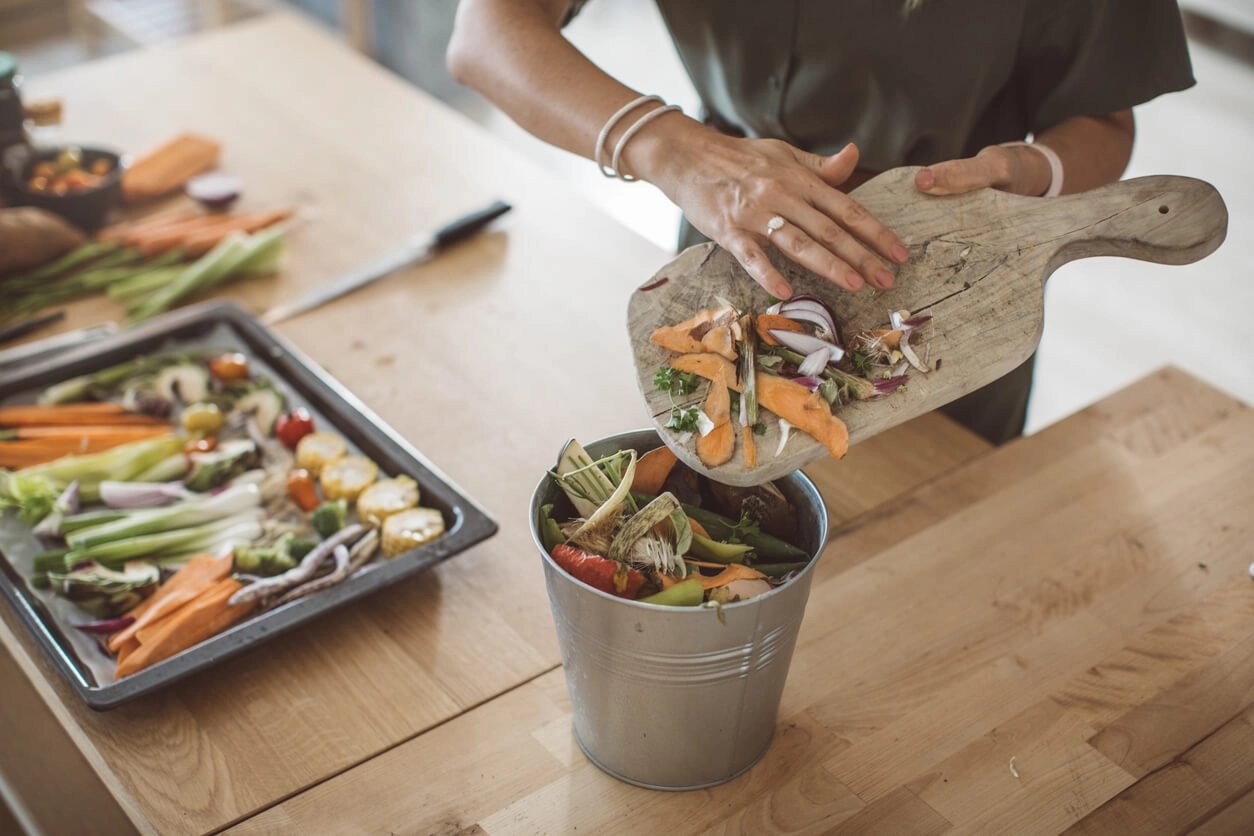
What is compost, and what is composting?
Compost is [[organic::Made from living things or natural materials; often refers to food grown without chemicals or artificial substances.]] material that is added to soil to help plants grow. Composting is the process through which we prepare compost. This is done by creating an ideal environment for food, plant and organic waste to [[decompose::To break down into simpler parts through natural processes, usually by bacteria or fungi.]].
Over time, the decomposed material turns into a fertiliser that is rich in nutrients. This fertiliser is often called ‘black gold’ by farmers.
What are the benefits of composting?
Usually, the waste that we throw away ends up in waste management centres. These centres bury organic waste deep into the Earth so it decomposes with time. This is known as a landfill.
However, landfills are known to produce a [[greenhouse gas::A gas that traps heat in the Earth’s atmosphere, contributing to global warming (e.g., carbon dioxide, methane).]] called methane. A better way to dispose of waste is to use it to make compost. Composting is an excellent way to recycle organic waste.
This is especially important since most of the waste we generate at home is kitchen and garden waste. Adding compost to soil also improves its health and lessens [[soil erosion::The gradual wearing away or removal of the top layer of soil by wind, water, or human activity.]].
Is it possible to compost at home?
Yes. Composting can be done at home easily. To compost at home, it is necessary to have a composting bin. You can purchase one from your local market easily.
The first step is to keep adding greens (food waste, grass, coffee, etc.) and browns (dead leaves, branches, papers, etc.) to the bin. All these materials must be [[shredded::Cut or torn into thin, narrow pieces.]] properly to form compost.
Keep adding greens and browns to the composting bin in equal quantities. Moisten the whole mixture by adding water. As you add more and more waste to the bin, be sure to turn or mix the bin. The whole process of making compost can take a few months.
The mixture is ready when it becomes dark brown and crumbly, smelling like soil instead of rotting vegetables.
Can I put everything in my composting bin?
No. We must be cautious of what we can put into our composting bin. You can easily put waste from your garden (leaves, grass, weeds, sticks, etc.), fruits and vegetable peels, eggshells, tea bags, paper or cardboard boxes and even fur.
Other things such as coal, dairy products, diseased or infected plants, meat or fish bones and pet waste (such as faeces) should not be put in the composting bin.
Quick Revision
Compost helps plants grow and is made from organic material through a process called composting.
Compost is a natural fertiliser that can be made at home with the help of a compost bin. Adding organic matter and water, along with mixing turns the mixture into compost.
We have to be careful of what we put in the compost bin. Dairy products, meat or fish bones, etc. should not be put into the compost bin.


