
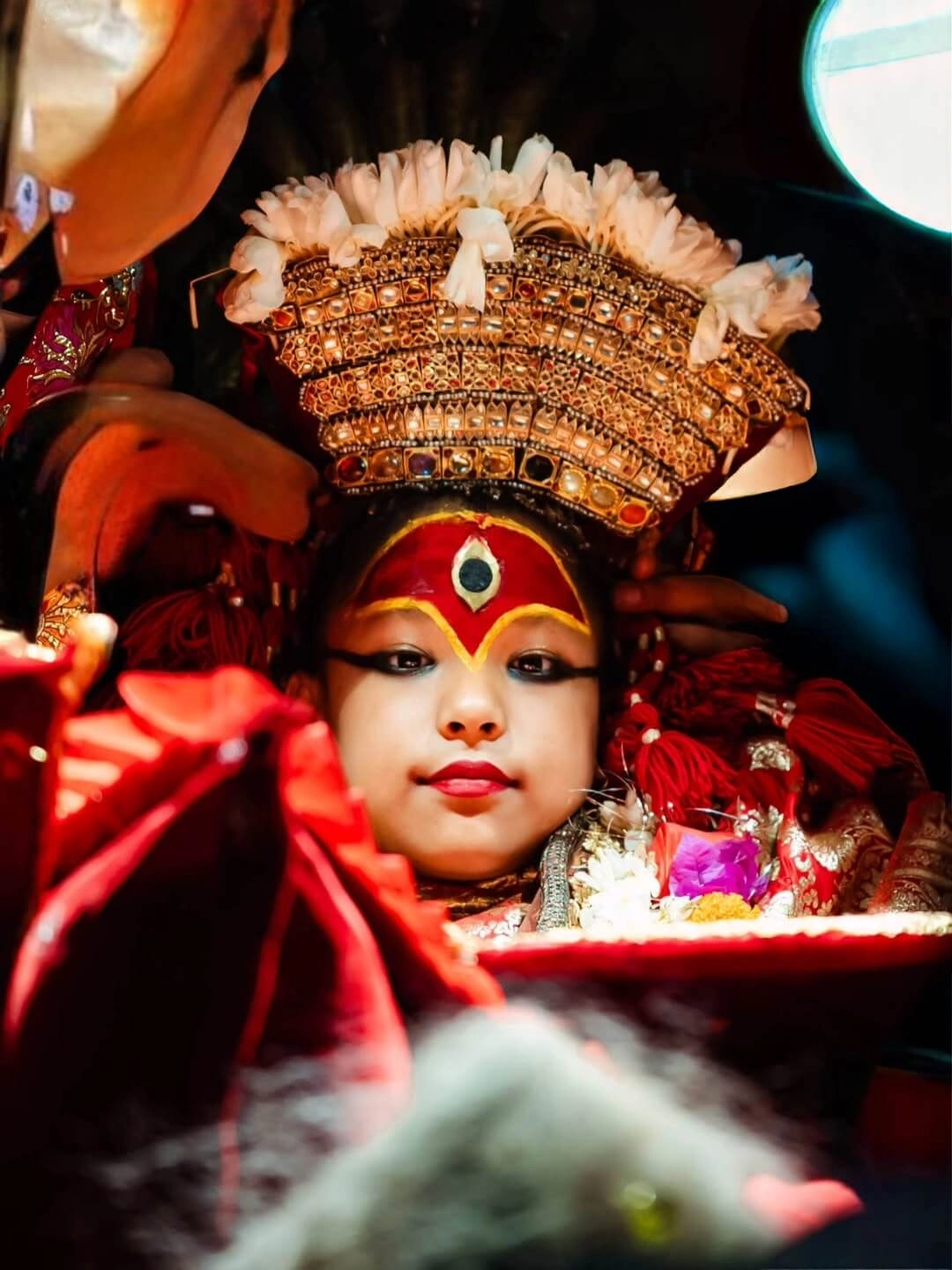
A Living Goddess
On September 30, 2025, a two-year-old girl named Aryatara Shakya was chosen as Nepal’s new Royal Kumari, the “living goddess.” People carried her to the old Kumari Ghar palace in Kathmandu. From that day, people will come to see her and ask for blessings when they want luck or protection.
What is a Kumari?
A Kumari is a young girl who people believe is the living form of a goddess, such as Taleju or Durga. The word “Kumari” means “princess.” This idea comes from Hindu and Buddhist beliefs in Nepal.
People say the Kumari has Shakti, which means strong spiritual power. Because of this, families and pilgrims treat the Kumari with great respect and hope she brings safety and good fortune.
Why is She Important?
Kumaris are important in Nepali culture and festivals. On special days, people stand in the streets to see the Kumari and bring flowers or small gifts. Many people watch the child’s face for signs. A calm look is taken as a good sign, while sadness or laughter can make people worried.
The Kumari links old stories and religion to everyday life, making her a living symbol of Nepal’s history.
How is She Chosen?
Girls are usually chosen between two and four years old, often from the Newar Shakya community. Priests check strict rules called the “32 perfections,” like clear skin, good teeth, and steady eyes. A test called the “Trial of Bravery” checks if the child stays calm during scary rituals.
If she passes, she moves into the Kumari Ghar palace, wears red clothes, and has a “third eye” painted on her forehead.
She then appears to the public on occasions, joins festivals, and gets private lessons and care while she is the Kumari.
Conclusion
The Kumari tradition is very old and many people value it. Some people worry about the child’s schooling and feelings because she lives apart from other children.
Today, caretakers try to give Kumaris better education, health checks, and emotional support so they can return to normal life more easily.
People want to keep this special culture alive in the future while also protecting the girls who become this living goddess.
Quick Revision
On 30 Sept 2025, 2-year-old Aryatara Shakya became Nepal’s Royal Kumari and moved to Kumari Ghar.
A Kumari is believed to be a living goddess with Shakti (spiritual power) who brings luck and protection.
She is chosen after strict tests, lives in the palace, appears at festivals, and today receives education and care.


