
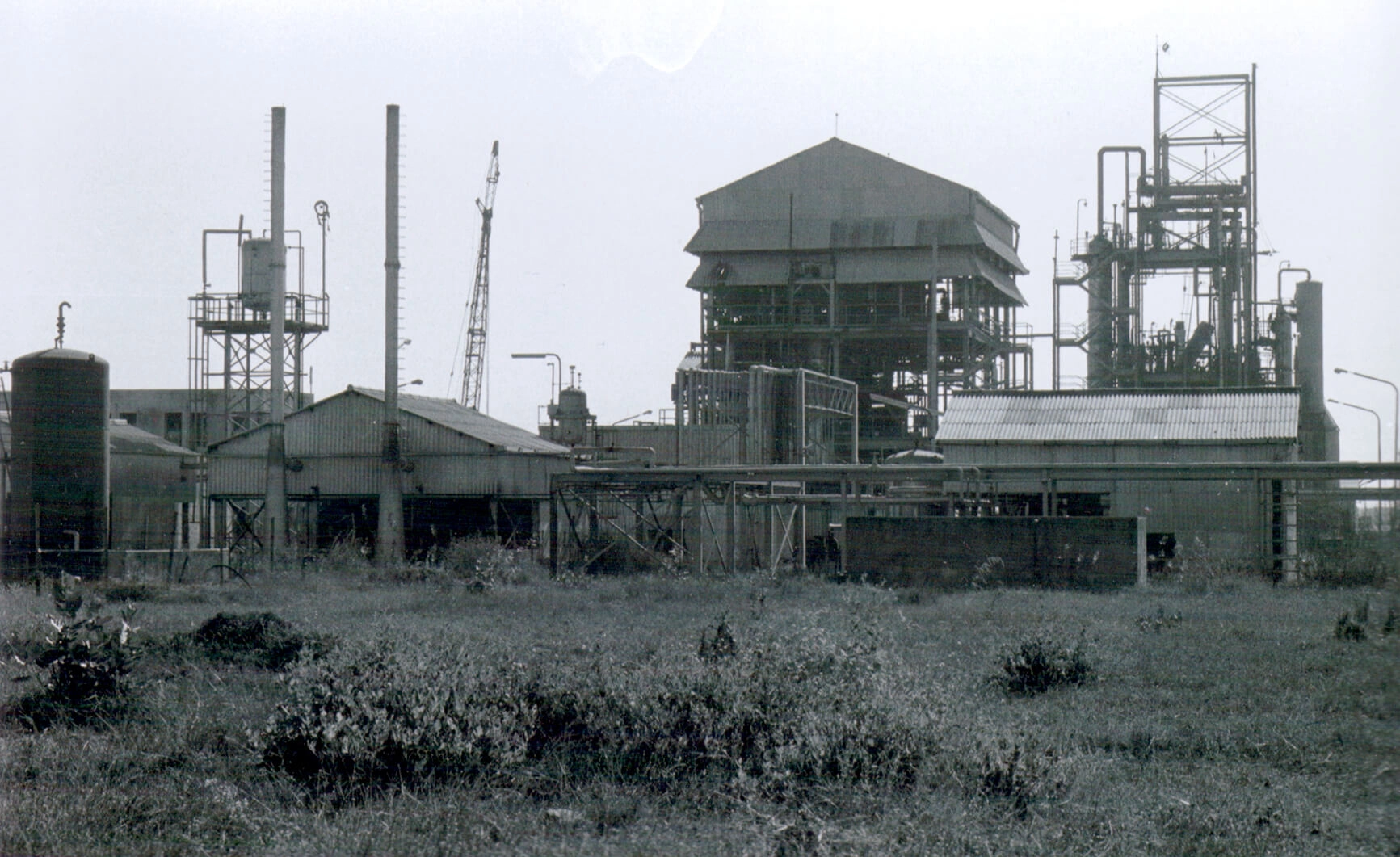
Exterior view of the Union Carbide pesticide factory in Bhopal, India / CC BY-SA 2.0.
What’s the News?
India has finally cleaned up all the harmful waste from the Union Carbide factory in Bhopal. This factory was the place where a big disaster happened in 1984.
Now, after almost 40 years, all the dangerous waste has been safely burned.
People in Bhopal were waiting for a long time for this to happen.
What Happened in 1984?
On the night of 2nd December 1984, a very poisonous gas called methyl isocyanate (MIC) leaked from a factory in Bhopal.
As it was night, people were sleeping, and no one was warned.
By morning, about 5,000 people had lost their lives. More than 5 lakh people got very sick. They had trouble breathing, coughing, and some even went blind due to the poisonous gas.
The gas came from a factory that made [[pesticides::Chemicals used to kill bugs on plants (plural)]] (chemicals that are used to kill insects on crops). The factory was owned by an American company called the Union Carbide.
The factory did not properly follow the safety rules, and that caused the [[terrible::Very very bad or awful]] gas leak.
What Was The Waste Left?
Even after the gas leak, the factory was not cleaned properly. Dangerous things stayed there for many years.
The soil around the place was filled with dangerous chemicals.
There were old pesticides like [[naphthol::A type of old pesticide chemical found at the site]] and [[carbaryl::Another pesticide chemical found at the factory]], and also broken [[containers::Large boxes or cans used to hold chemicals]] and [[half-made::Only partly made or finished]] chemicals.
All this waste added up to 358 [[tons::A way to measure heavy weight (1,000 kilograms)]]. It kept making people sick and made the land and water unsafe. Some babies were also born with health problems.
How Was the Waste Burned?
The waste was moved to a special place called Pithampur, which is 250 km away from Bhopal.
There, it was burned at a very high temperature, more than 1,100°C! This process of burning something at an extremely high temperature is called [[incineration::The process of burning waste at very high heat]].
It was done using special machines with [[filters::A tool that cleans air by catching bad particles]] so that no bad smoke could escape.
The air was also checked all the time to make sure it stayed safe.
By July 3, 2025, all the waste was burned, leaving about 800 tons of [[ash::The powder left after burning something]]. This ash will now be stored safely so it doesn’t harm anyone.
Why This Matters
The cleaning of the harmful chemicals from the place took a long time, but it is finally done.
People in Bhopal hope this brings peace to them and the [[victims::People who got hurt or sick because of the disaster]] of the 1984 disaster.
It also teaches us to be careful with dangerous chemicals and to clean up when something bad happens.
Quick Revision
In Bhopal, deadly factory waste from Union Carbide was finally cleaned after 40 years.
In 1984, poisonous gas leaked at night, killing 5,000 people and making many others very sick.
358 tons of toxic waste was burned safely at high heat in Pithampur.
This cleanup gives peace to victims of the Bhopal gas disaster and teaches safety.


