
A historic opening
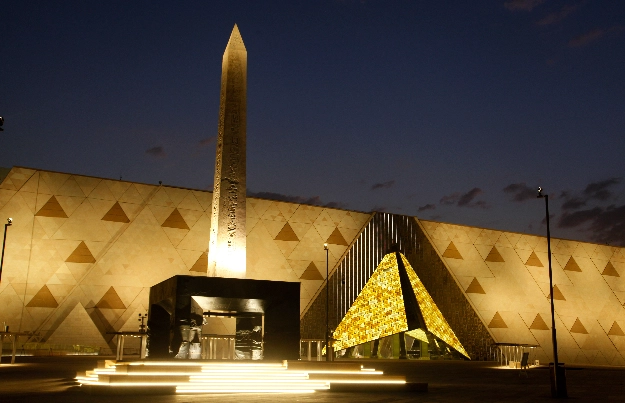
After more than two [[decades::A period of ten years.]] of work, Egypt has finally opened the Grand Egyptian Museum (GEM) near the Pyramids of Giza. The museum opened to the public on 4th November 2025, following a grand ceremony attended by leaders from 79 countries.
Built at a cost of over $1 billion, it is now the largest [[archaeological::Related to the study of ancient human history through objects, buildings, and ruins left behind.]] museum in the world. The museum celebrates Egypt’s ancient civilisation in a modern, world-class setting.
A timeless civilisation
The Egyptian civilisation is one of the oldest in the world. It began around 5,000 BCE and lasted for more than 3,000 years.
The Egyptians lived along the River Nile, where they built great cities, invented [[hieroglyphic writing::A system of writing used by ancient Egyptians that used pictures and symbols instead of letters.]], and made the 365-day calendar. They were skilled in architecture, maths, and astronomy.

They believed in life after death, so they made [[mummies::Dead bodies preserved using special methods so they do not decay, as done in ancient Egypt.]] and filled [[tombs::Graves or burial places where people, especially kings and queens, were buried with their belongings.]] with treasures for the [[afterlife::The life that people believe exists after death.]]. Many of these treasures are now safely kept in the new museum.
Their science, art, and engineering helped shape the world we live in today.
The Grand Egyptian Museum
The Grand Egyptian Museum was built to protect Egypt’s history and keep all its priceless treasures in one place.
Work on the museum started in 2005, but it was delayed by political events and the covid pandemic. It is built only 2 kilometres from the Giza pyramids and covers 500,000 square meters, which is as big as 70 football fields!
The building was designed by Irish architects Heneghan Peng. Its triangular shape looks like the pyramids, and its glass front lets visitors see the real pyramids from inside.
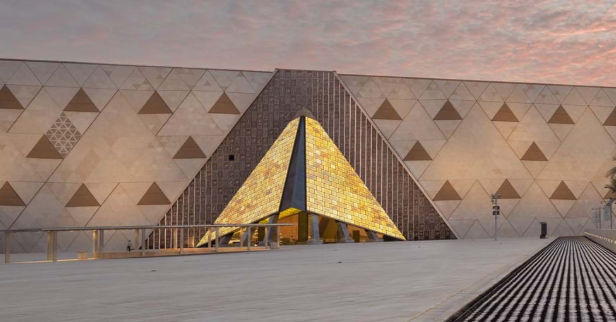
Over 5,000 engineers and workers helped build this amazing place.
What’s inside the museum?
The museum holds over 100,000 [[artefacts::Objects made or used by people in the past, often found during archaeological studies.]] that tell Egypt’s 7,000-year-old story.
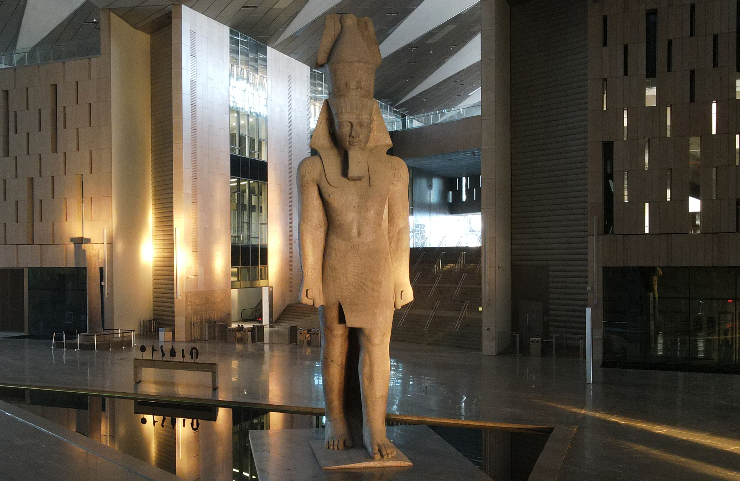
At the entrance stands a huge 11.3-meter-tall statue of [[Pharaoh::A king or ruler of ancient Egypt.]] Ramesses II, weighing 83 tons.
The museum’s biggest highlight is King Tutankhamun’s full treasure collection of over 5,000 items, including his solid gold mask, golden throne, and jewels, all displayed together for the first time.

Another special piece is King Khufu’s 4,600-year-old boat, the oldest wooden ship in the world, believed to have carried the pharaoh’s spirit to the afterlife.

The museum also includes a children’s innovation centre, AI-powered tour guides, virtual reality exhibits, and a massive conservation lab where scientists restore ancient artefacts.
Why does it matter?
The Grand Egyptian Museum is not just a museum; it is a centre of culture and learning. It protects ancient treasures and helps people understand Egypt’s history better.
It is expected to bring about five million visitors every year, create new jobs, and inspire young Egyptians to take pride in their culture.
It will also help Egypt ask for the return of important artefacts like the [[Rosetta Stone::An ancient stone with writing in three scripts that helped experts understand Egyptian hieroglyphs.]], which are kept in other countries.

A golden bridge between history and tomorrow
The Grand Egyptian Museum is a place where the past meets the future. It tells the story of how people lived, believed, and created thousands of years ago.
As President of Egypt, El-Sisi, said during the opening, this museum “writes a new chapter in the story of this ancient nation.”
It shows that science and history can come together to keep our world’s greatest treasures alive for generations to come.
Quick revision
The Grand Egyptian Museum (GEM) opened on 4th November 2025 near the Pyramids of Giza.
It’s the largest archaeological museum in the world, covering 500,000 square metres. It cost $1 billion and over 20 years to build.
It displays more than 100,000 artefacts, including Tutankhamun’s treasures, Ramesses II’s statue, and Khufu’s 4,600-year-old boat.


