
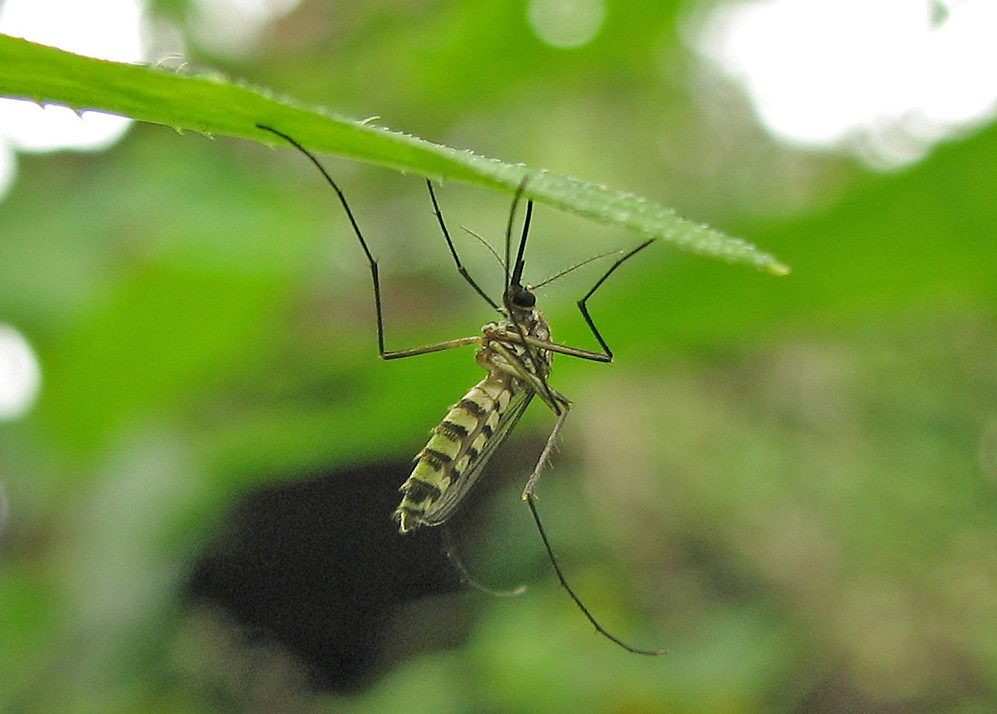
"Mosquito" by wildxplorer is licensed under CC BY 2.0.
Mosquitos to Save Birds
Scientists in Hawaii are doing something unusual to save rare honeycreeper birds from avian malaria. Avian malaria is a deadly disease in birds spread by mosquitoes. They are releasing millions of male mosquitoes every week.
These special males carry a bacterium called Wolbachia that makes their eggs not hatch. Wolbachia is a type of bacteria that stops mosquito eggs from hatching.
This plan is called the Incompatible Insect Technique. Incompatible Insect Technique is a way to reduce insect numbers by letting out lab-made males that cannot produce offspring.
Why Is This Being Done?
Honeycreepers are small, colorful songbirds found only in Hawaii. They have special beaks to eat fruit or catch insects. Earlier, there were about 50 species, but today only 17 remain, and many are endangered. Endangered animals or birds are species that may soon disappear forever.
Honeycreepers are also important for pollination and for keeping insect numbers low in forests. Pollination is the process that helps plants spread seeds and fruits.
Honeycreepers never faced avian malaria before. So they have no immunity; even one mosquito bite can kill them. Immunity is the body’s ability to fight diseases.
Earlier, they lived safely in cooler mountains. But because of climate change, mosquitoes can now live even there.
How Will This Help?
Releasing these mosquitoes will lower avian malaria. That will give the honeycreepers a chance to survive. If malaria is controlled, the birds can live, breed, and slowly grow in number.
Since honeycreepers are pollinators and insect-eaters, saving them also protects Hawaii’s forests. Helping the birds helps the whole ecosystem. Ecosystem is a community of living things, like plants, animals, and birds, living together in one place.
Is This Completely Safe?
There are good sides and challenges.
Only male mosquitoes are released, and males do not bite. People and animals are safe. The method also avoids harmful pesticides and has worked in Mexico and China. Pesticides are chemicals used to kill insects.
However, the project is costly and must continue for years. Scientists don’t know if mosquito numbers will stay low. Some people are also worrying about releasing so many lab-bred insects.
Conclusion
This bold project could guide the world in saving endangered animals.
Hawaii is sometimes called the “extinction capital of the world,” but with this effort, honeycreepers may keep singing in its forests for generations.
Quick Revision
In Hawaii, scientists release male mosquitoes with Wolbachia so mosquito eggs don’t hatch.
This reduces avian malaria, a disease that can kill honeycreeper birds with one bite.
Honeycreepers are endangered and live only in Hawaii.
Climate change lets mosquitoes reach their mountain homes.
Fewer mosquitoes help birds survive and protect forests.


