
"Space - Helix nebula" by Trodel is licensed under CC BY-SA 2.0.
The World’s Biggest Camera!
Scientists have shared the first photo from space taken by the biggest camera in the world!
This camera is bigger than a car and was made to help scientists learn more about stars, planets, and the universe.
It is called the [[LSST Camera::The big special camera at the Vera C. Rubin Observatory that takes space pictures.]] , and it is placed in [[Chile::The country in South America where the observatory is located.]], at the Vera C. Rubin Observatory. This is one of the best places in the world to look into space.
How Big Is This Camera?
The name of this camera, 'LSST', means 'Legacy Survey of Space and Time'.
The camera is 14 feet long and its weight is around 3,000 kilograms, which is almost like three cars!
Its [[main lens::The big glass part that gathers most of the light for the camera.]] is 5 feet wide, which is taller than many children!
Inside the camera are 189 special [[sensors::Small parts inside the camera that feel light and make pictures.]] called CCDs ([[Charge-Coupled Devices::The special light‑detecting parts (CCDs) in the camera.]]). These are like digital eyes that can see things in space very clearly, even from very far away.
The camera takes pictures that are 3,200 [[megapixels::One million pixels, used to tell how big a picture is.]] big. That means it can clearly see tiny things that are billions of kilometers away.
How Does The Camera Work?
The LSST Camera works with a big [[telescope::A tool with lenses or mirrors that makes faraway things look closer.]] that uses mirrors to collect light from space.
When light from stars or [[galaxies::Huge groups of stars, like big star cities in space.]] enters the camera, it hits the CCD sensors.
These sensors use pixels (tiny squares that catch light) to change the light into [[electric signals::Little bursts of electricity that carry picture information.]]. These signals are then joined together to make one big photo.
To work well, the camera’s sensors are kept very cold, at -101°C.
What Photos Did It Take?
The first picture taken by the camera shows two colorful clouds in space called '[[nebulae::Colorful clouds in space where new stars are born.]]'. These are places in space where new stars are born.
Their names are the [[Trifid Nebula::One of the bright space clouds where new stars are born, in the first photo.]] and the [[Lagoon Nebula::The other bright space cloud seen in the first photo where stars form.]].
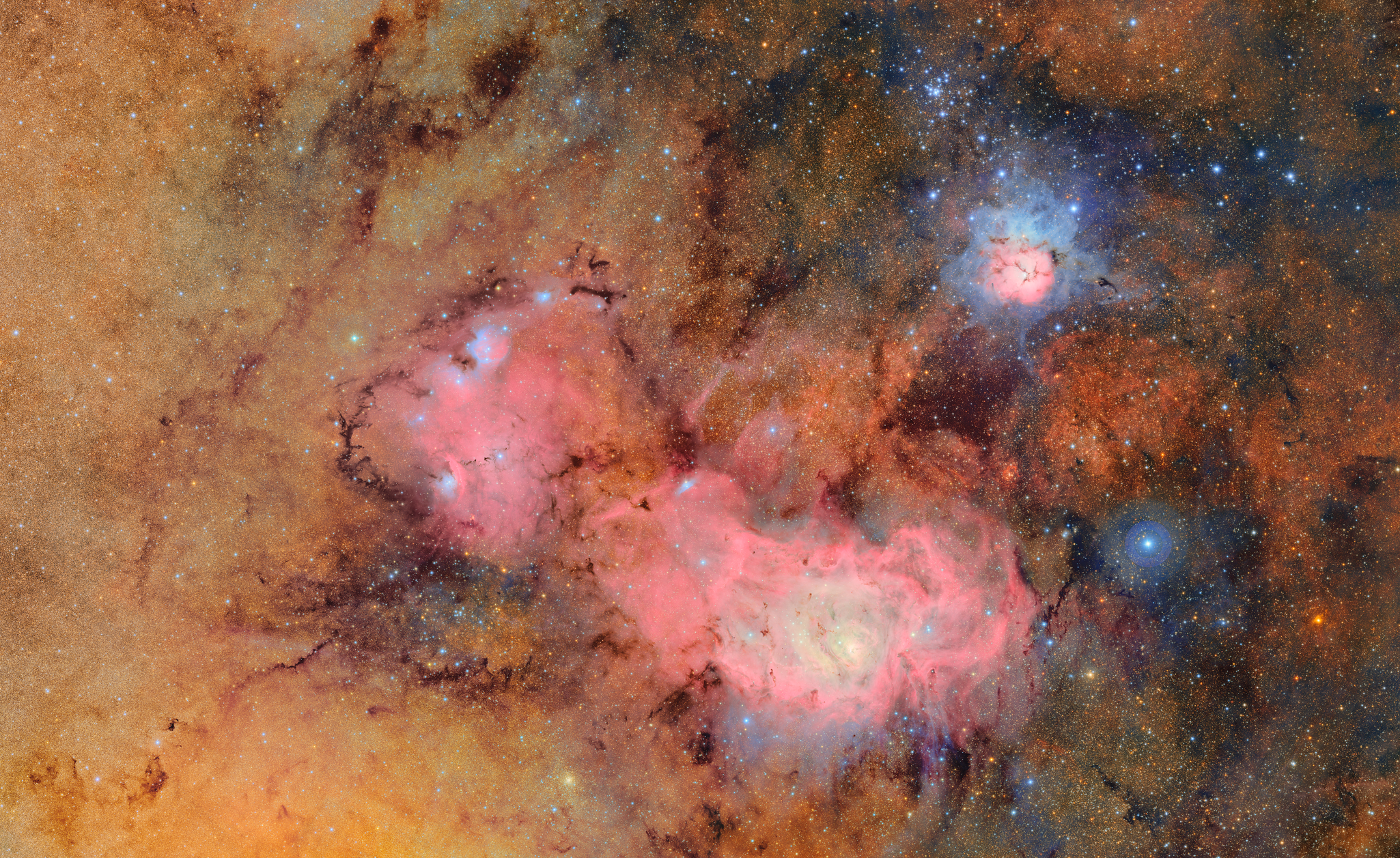
This photo was made by putting together 678 small pictures to make one big picture, which has almost 5 billion pixels!
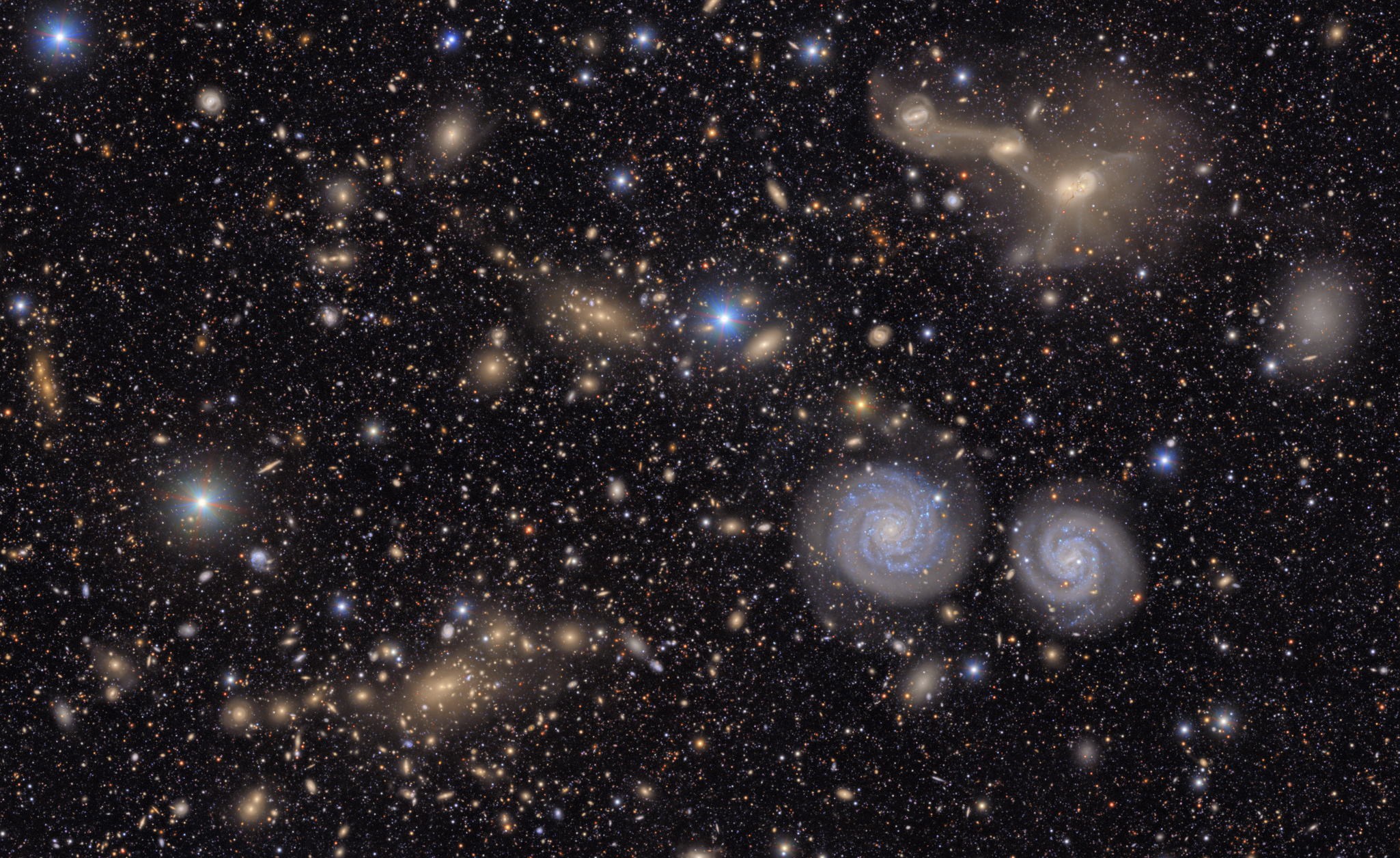
The camera also took a photo of the [[Virgo Cluster::A huge group of over ten million galaxies that the camera also photographed.]], which is a large group of galaxies and has over 10 million galaxies!
Why This Camera Is So Amazing
This camera will take pictures of the sky every few nights for the next 10 years.
It will help scientists find [[asteroids::Rocky pieces in space that orbit the Sun.]], planets and learn more about our universe.
This is just the start of an exciting journey to explore space!
Quick Revision
Huge camera: The LSST Camera is bigger than a car and is kept in Chile at the Vera C. Rubin Observatory to study space.
Very powerful: It is 14 feet long, weighs 3,000 kg, and takes super-clear 3,200-megapixel photos using 189 special sensors.
How it works: Light from stars goes into the camera, turns into signals, and makes one big photo. It stays very cold (–101°C).
First photos: It clicked colorful star clouds (Trifid & Lagoon Nebulae) and a huge group of galaxies called the Virgo Cluster.
Why important: For 10 years, it will help find asteroids, planets, and learn more about the universe


